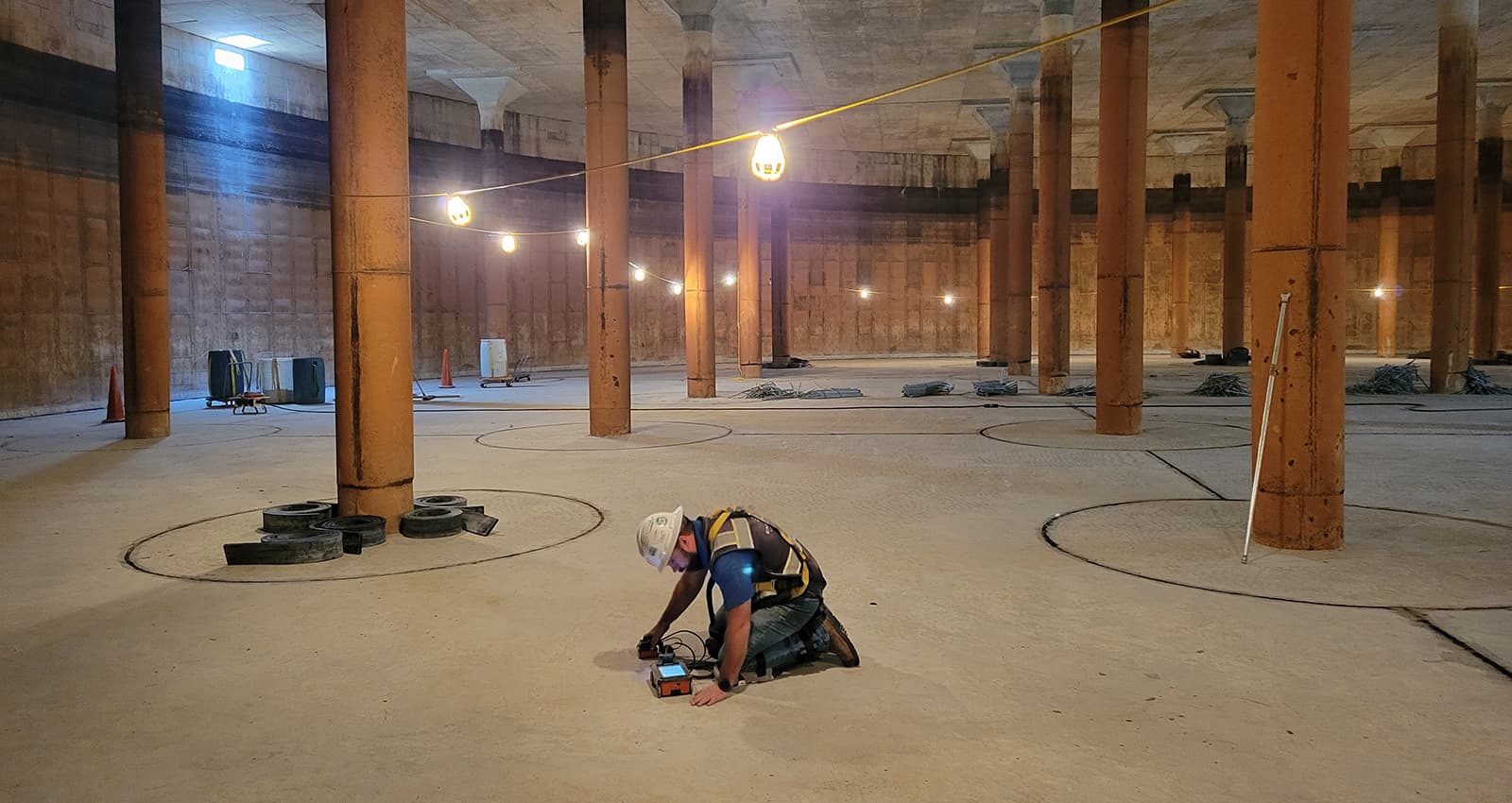
Imagine you’re about to dig a hole in your backyard to build a patio, install a fence post, or pour a new concrete slab. You pick up the shovel, and then a worry creeps in: what if something is buried down there? Water pipes, electrical lines, gas lines, and sewer connections all run beneath our feet, and most of us have no idea where they are.
That’s the problem underground scanning solves. It lets you “see” below the surface without digging a single hole.
So, What Is Underground Scanning?
Underground scanning is a way of detecting what’s hidden under soil, concrete, or asphalt using specialized equipment. Think of it like an ultrasound, but for your property. Just as a doctor uses sound waves to look inside the body without surgery, a scanning technician uses radio waves and electromagnetic signals to look beneath the ground without excavation.
How Does It Actually Work?
Most underground scanning technicians will use one of two tool:
Ground penetrating radar (GPR). A technician rolls a cart-like device about the size of a lawnmower across the surface, and it sends tiny radio pulses into the ground. When those pulses hit something solid, like a pipe, a tank, or rebar, they bounce back. The device reads those echoes and builds a picture of what’s below. GPR is especially useful because it finds both metal and non-metal objects, such as plastic pipes and concrete.
Electromagnetic locators. These devices detect the signals given off by metal pipes and electrical cables. Sometimes a technician applies a small signal to a utility line so it can be traced more accurately from above.
Once something is detected, the technician marks its location on the surface with paint or flags, so everyone knows what’s there and where to avoid.
Why Should You Care?
Hitting a buried line can go very wrong. Striking a gas line is dangerous, cutting a power cable can cause injury or outages, and breaking a water or sewer pipe means flooding, repair bills, and delays. Even when no one gets hurt, the cost of repairs and lost time can dwarf the cost of a scan.
Scanning is also useful beyond utilities. It can help with:
- Concrete coring and cutting, to avoid slicing through steel reinforcement or conduit
- Locating old underground tanks or forgotten structures on a property
- Planning construction projects, so surprises don’t blow up your budget
- Landscaping and irrigation work, such as adding sprinklers or planting large trees
The beauty of underground scanning is that the professionals handle the technology. You simply explain what you plan to do, they scan the area, and they show you what they found. The results are typically marked right on the ground, so there’s no need to interpret complicated charts yourself.
Underground Scanning in Southern California
If you’re a homeowner, contractor, or property manager in Southern California, local specialists can make this process easy. Enhanced Scanning is one company that provides underground scanning services in the region. If you’re planning any project that involves digging, drilling, or cutting into the ground or concrete, contacting a scanning provider like this beforehand is a smart step.
Conclusion
You don’t need to understand radar physics to benefit from underground scanning. Just remember the basic idea: before you dig, find out what’s down there. A quick scan can save you money, time, and potentially a lot of danger.
